
Cover ADU Builders in Temecula: A Homeowner’s Guide
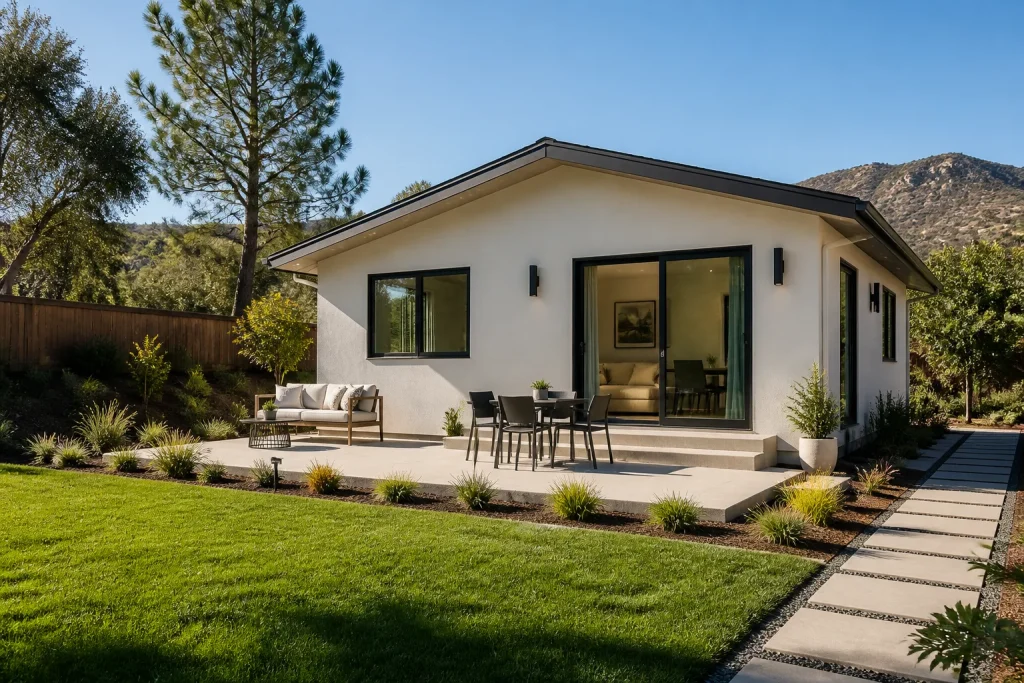
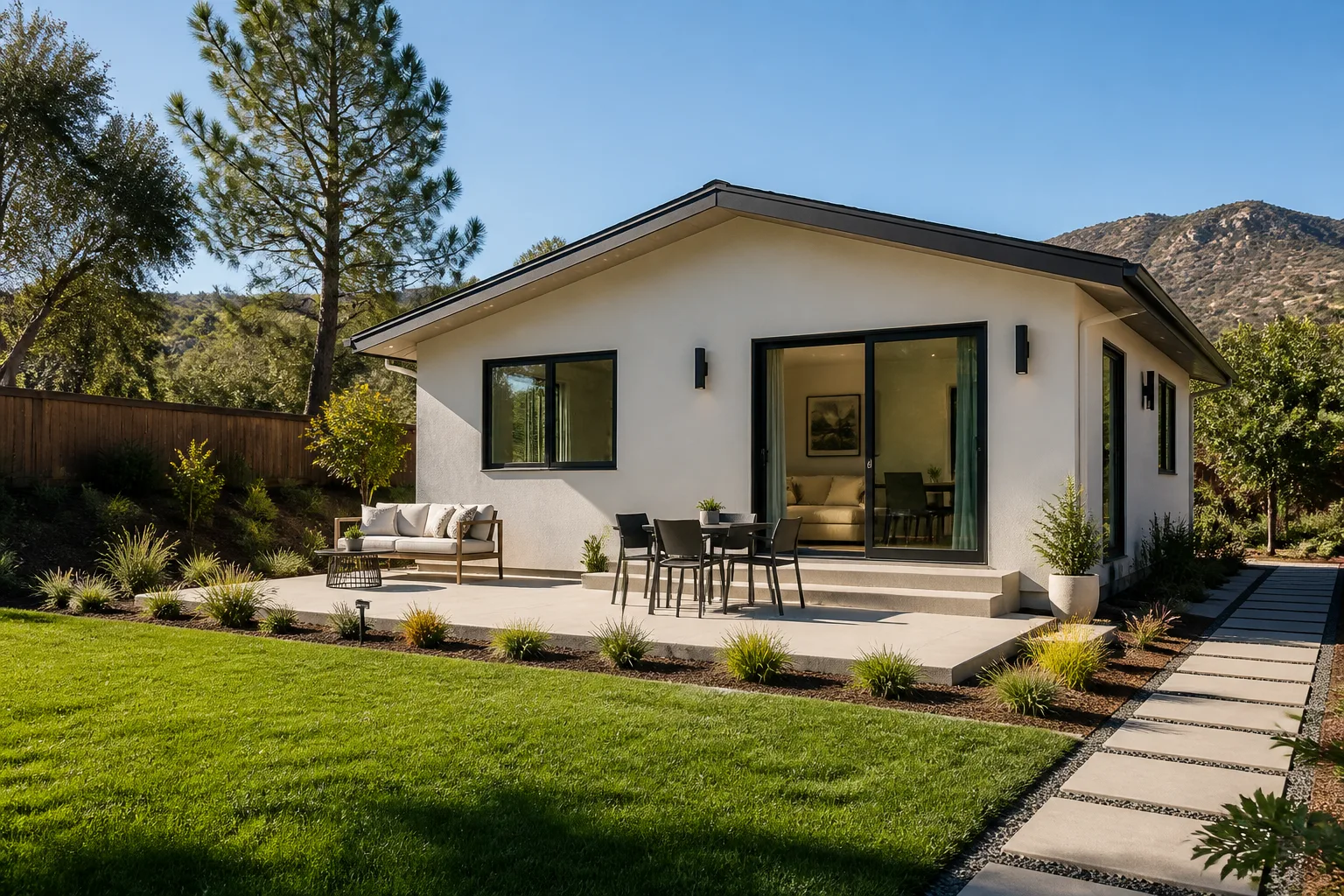
Cover builds a panelized prefab ADU system that ships flat and assembles on-site in weeks, not months. The finished unit typically lands between $250 and $350 per square foot in Temecula once site work, foundation, and utility connections are included. If you’d rather not sort through permit portals and contractor categories on your own, call (833) 863-7015 and we’ll walk you through it.
Here’s the thing most Temecula homeowners don’t realize until they’re three weeks into research: there are roughly four types of contractors marketing themselves as ADU builders in this city right now. Dedicated ADU firms, general contractors who added ADUs to their service list, single-brand prefab dealers, and design-build hybrids. Only one of those categories has actually pulled 20+ ADU permits in Riverside County. The label on a website tells you almost nothing about which category a company falls into.
This guide breaks down what to look for, what to avoid, and how to verify a builder’s actual ADU track record before you sign anything. We’re Guest House ADU Builders, and we’ve spent years navigating Temecula’s specific lot types, permit cycles, and prefab options. Here’s what we’ve learned.
Key Takeaways
- Temecula ADU builders fall into four categories that charge similar rates but deliver very different outcomes.
- Riverside County’s public permit portal lets you verify actual ADU permit counts for any contractor. Most homeowners never check.
- Prefab dealers are only worth your time if they can compare multiple brands side by side, not pitch one system.
- Temecula’s mix of tract homes, wine country lots, and newer subdivisions means lot-specific experience matters more than company headcount.
- Three contract red flags show up repeatedly in Temecula ADU projects: vague allowances, missing utility scope, and permit-pull disclaimers.
The Four Contractor Categories in Temecula’s ADU Market
Walk into any Temecula home show or scroll through local contractor listings and you’ll find dozens of companies calling themselves ADU builders. Most fall into one of four buckets, and each behaves differently once the contract is signed.
Dedicated ADU firms exist solely to build accessory units. They’ve navigated Temecula’s setback rules, Riverside County’s permitting cycles, and the quirks of California’s ADU statutes repeatedly. They can tell you in the first conversation whether your side yard will accommodate a unit or whether your slope will trigger additional foundation costs. This category is small.
General contractors moonlighting are the largest group. They build decent kitchens, bathrooms, and room additions, then added ADUs to their website because the market demanded it. The problem shows up in permit history. A generalist might have pulled three ADU permits in three years, all on standard flat lots in newer Temecula subdivisions. That’s fine until your property sits on a sloped wine country parcel with a septic line running through the build zone.
Single-brand prefab dealers sell one manufacturer’s product. They know that system deeply, which has real value. But they’ll never tell you that a different brand’s panel dimensions save you $20,000 on your specific lot. Their job is to sell the one thing they have.
Design-build hybrids promise architectural design and construction under one roof. For custom ADUs on unusual Temecula lots, that integrated approach can work well. For a standard backyard unit, it often adds design fees you don’t need.
Ask any builder you’re considering: “How many ADU permits have you pulled in Riverside County in the last five years?” If they hesitate or pivot to talking about their kitchen remodels, you’re talking to a generalist.
How to Verify a Contractor’s ADU Permit History in Riverside County
This is the step 90% of Temecula homeowners skip, and it’s the single most reliable way to separate real ADU builders from marketers. Riverside County maintains a public permit portal where you can look up permits by contractor name, license number, or project address.
Here’s the process:
- Go to Riverside County’s building and safety permit search page.
- Search by the contractor’s license number (every legitimate builder lists it on their proposal).
- Filter results for accessory dwelling unit, detached unit, or ADU permit types.
- Look at the dates. Two permits from 2019 doesn’t make someone an active ADU builder in 2026.
- Check the project addresses. If permits cluster in one Temecula subdivision, that’s a red flag for lot-type experience.
A contractor who has pulled 15 permits on flat lots in Harveston or Morgan Hill may struggle with a slope-side parcel in De Luz or a tight-access lot near Old Town. Temecula’s geography varies wildly from one street to the next, and ADU foundation work changes accordingly.
In our experience, homeowners who run this check before signing save themselves an average of three to six weeks of stop-start construction delays.
What “Design-Build” Actually Means for an ADU, and How the Term Gets Misused
Design-build should mean one firm handles both the architectural drawings and the construction. One contract, one point of accountability, no finger-pointing between an architect who drew something and a builder who says it can’t be built for that price.
Here’s what design-build does not mean: a general contractor who hires a freelance draftsperson to stamp basic plans, then calls the package design-build because they managed both steps. We’ve seen Temecula homeowners pay design fees for what amounts to a stock ADU plan with their address pasted on it.
This matters specifically in Temecula because the city’s ADU review involves specific standards for height, setbacks, and lot coverage. Design-build firms with real ADU experience have learned which plan elements get flagged and which pass cleanly. Generalists learn those lessons on your project timeline, at your expense.
Ask three questions before accepting a design-build pitch:
- Who owns the design liability if the city rejects the plans?
- How many rounds of revisions are included before additional fees kick in?
- Can I see the specific ADU plans your firm has gotten approved in Temecula in the last 24 months?
A firm that can answer all three without hesitating is doing real design-build work. A firm that stumbles is doing design-build marketing.
Questions to Ask a Prefab Brand Dealer That Reveal Whether You’re Getting Real Choice
Prefab ADUs are reshaping Temecula’s backyard housing market. Systems like Boxabl, Plant Prefab, and panelized builds are faster than site-built construction, and the finish quality has improved dramatically over the past five years. But the dealer you talk to determines whether prefab saves you money or locks you into the wrong system.
A single-brand dealer has one answer for every question. Their system is the best, full stop. A brand-agnostic builder can compare systems on construction time, price per square foot, and finish quality against your specific lot conditions.
Here are the questions that separate the two:
- “Which prefab brands did you choose not to represent, and why?” A real advisor can name systems they evaluated and rejected. A dealer can’t.
- “What site conditions would make your system a poor fit?” Every prefab system has constraints: crane access, panel width limitations, foundation compatibility. A dealer should know theirs. If they say “none,” walk.
- “Can you show me a side-by-side comparison of the systems you build with?” We regularly compare Plant Prefab, Boxabl, and panelized options for Temecula homeowners, because the right answer changes based on lot access, utility locations, and budget. If your builder can’t produce a comparison, you’re getting a pitch.
- “Who handles the site work?” The prefab unit is one part of the project. Foundation, utilities, grading, and site prep are separate line items. A dealer who glosses over site work is pricing you a unit, not a finished ADU.
We’re authorized to build with seven prefab ADU brands, including Boxabl, Plant Prefab, and Tuff Shed. That roster exists so our recommendations follow your lot and budget, not a single manufacturer relationship. It costs us more to maintain those partnerships. It saves Temecula homeowners from buying the wrong system.
Why Temecula Lot Types Matter More Than Company Size
Temecula is not one housing market. It’s at least three, and they each place very different demands on an ADU builder.
Older tract homes near Old Town and along Rancho California Road sit on modest lots with mature landscaping and established utility lines. The ADU challenge here is access: can construction equipment reach the backyard without tearing out an established oak or crossing a neighbor’s easement?
Wine country estates in De Luz and along the eastern corridor involve slopes, septic considerations, and well systems instead of municipal utilities. Foundation work on sloped terrain costs more, and not every prefab system handles grade changes gracefully. A builder who’s done ADUs on flat suburban lots in Murrieta has not prepared for a De Luz hillside.
Newer subdivisions in Harveston, Morgan Hill, and Wolf Creek have HOAs with their own architectural review processes layered on top of Temecula’s permitting. HOA ADU rules can affect exterior finishes, roof pitches, and even window placement. A builder needs to anticipate those reviews, not react to them.
When you’re interviewing builders, ask specifically about ADUs they’ve completed on lots like yours. Not just in Temecula generally, but in your neighborhood or terrain type. A builder who’s done 40 units in Riverside County but none on a slope is guessing on your hillside.
We once walked a Temecula homeowner through a prefab comparison where the brand they’d originally wanted couldn’t clear the narrow side-yard access on their 1960s tract lot. The unit simply wouldn’t fit through the passage. The right call was a panelized system that shipped flat and assembled from the back. That’s the conversation a single-brand dealer would never have started.
Three Contract Red Flags Common in Temecula’s ADU Market
After years of reviewing ADU contracts, we’ve identified three red flags that show up repeatedly. None of them look alarming at first glance. All of them have cost Temecula homeowners real money.
Vague allowance line items. A contract that says “flooring allowance: $4,000” without specifying materials, square footage, or brand invites change orders later. You think you’re getting hardwood. The builder priced vinyl plank. Precise contracts break out allowances by room, material type, and square footage.
Missing utility coordination scope. Connecting an ADU to water, sewer, and electrical service involves coordination with utilities, sometimes trenching across existing landscaping, and occasionally upgrading the main panel on your home. A contract that doesn’t explicitly state who handles utility coordination, what it costs, and what happens when the electrician discovers your 100-amp panel needs upgrading is a contract with a hole in it. Temecula’s older homes, especially pre-1990 builds, frequently need panel upgrades for ADU electrical loads.
Permit-pull disclaimers hidden in fine print. Some contracts include language stating the homeowner is responsible for permit approval timelines or that delays caused by the city don’t extend the project timeline. That’s normal to a degree. What’s not normal is language that makes the homeowner responsible for plan corrections or resubmittal fees if the builder’s drawings get rejected. Read that section twice.
Get every material allowance itemized, every utility scope written out, and every permit contingency defined before you sign. If a builder won’t do that, you’re not getting a fixed price. You’re getting a starting price.
When to Call a Pro
If you’ve made it this far and your head is spinning, that’s reasonable. ADU projects involve zoning rules, prefab comparisons, utility coordination, foundation decisions, and contract review, all before a single wall goes up. You don’t need to navigate this alone.
Call (833) 863-7015 and we’ll walk your specific Temecula property through the process. We compare prefab and site-built options, verify what your lot will accommodate, and give you a straight answer about what this will cost and how long it will take. Estimates are free.
Related services in Temecula: if you’re already adding an ADU, it’s often the right time to tackle the main house projects too. We offer kitchen remodeling in Canyon Lake and bathroom remodeling in Canyon Lake as part of a coordinated ADU-plus-home-upgrade project. Neighboring communities like Canyon Lake share many of the same lot considerations.
The Bottom Line
Temecula’s ADU market is filled with companies using the same title to describe very different capabilities. A general contractor who’s built three ADUs, a single-brand dealer who sells one system, and a dedicated ADU firm that’s navigated Riverside County permits dozens of times all call themselves ADU builders. The label is worthless. The permit history, the comparison process, and the contract details are what matter.
Verify permit counts through Riverside County’s public portal. Ask the questions that separate advisors from salespeople. Read the contract line by line, especially allowances and utility scope. And match the builder to your specific lot type, because Temecula’s terrain changes the project.
If you’re in Temecula and need help, Guest House ADU Builders offers free estimates. We compare seven prefab brands, specify James Hardie exterior products as our standard, and handle the whole project from permit to punch list. Call (833) 863-7015 to schedule yours.
Frequently Asked Questions
A Cover ADU in Temecula typically costs between $250 and $350 per square foot all-in, including site work, foundation, utility connections, and the unit itself. A standard 400-square-foot studio often lands between $100,000 and $140,000. For an exact quote on your specific lot, call (833) 863-7015 for a free estimate.
Prefab ADUs in Temecula typically take four to eight months from permit application to move-in, depending on the system and your lot conditions. Site-built ADUs generally run eight to fourteen months. Riverside County permit review adds four to eight weeks on the front end. Your builder choice affects this timeline more than any other single factor.
Most single-family properties in Temecula qualify for at least one ADU under California state law, though lot size, setbacks, and terrain determine the maximum unit size and placement. HOA communities in Temecula may have additional architectural review requirements. A site evaluation early in the process tells you exactly what your lot will hold.
Many older Temecula homes need electrical panel upgrades to handle ADU loads, especially homes built before 1990 with 100-amp panels. Newer homes with 200-amp service often accommodate an ADU without changes. Your builder should identify this requirement during the site evaluation, not after construction starts.
Written by the team at Guest House ADU Builders, serving Temecula since 2011.
Need ADU Help?
Call Guest House ADU Builders — licensed & insured, here with fast after-hours help in Temecula.
(833) 863-7015